


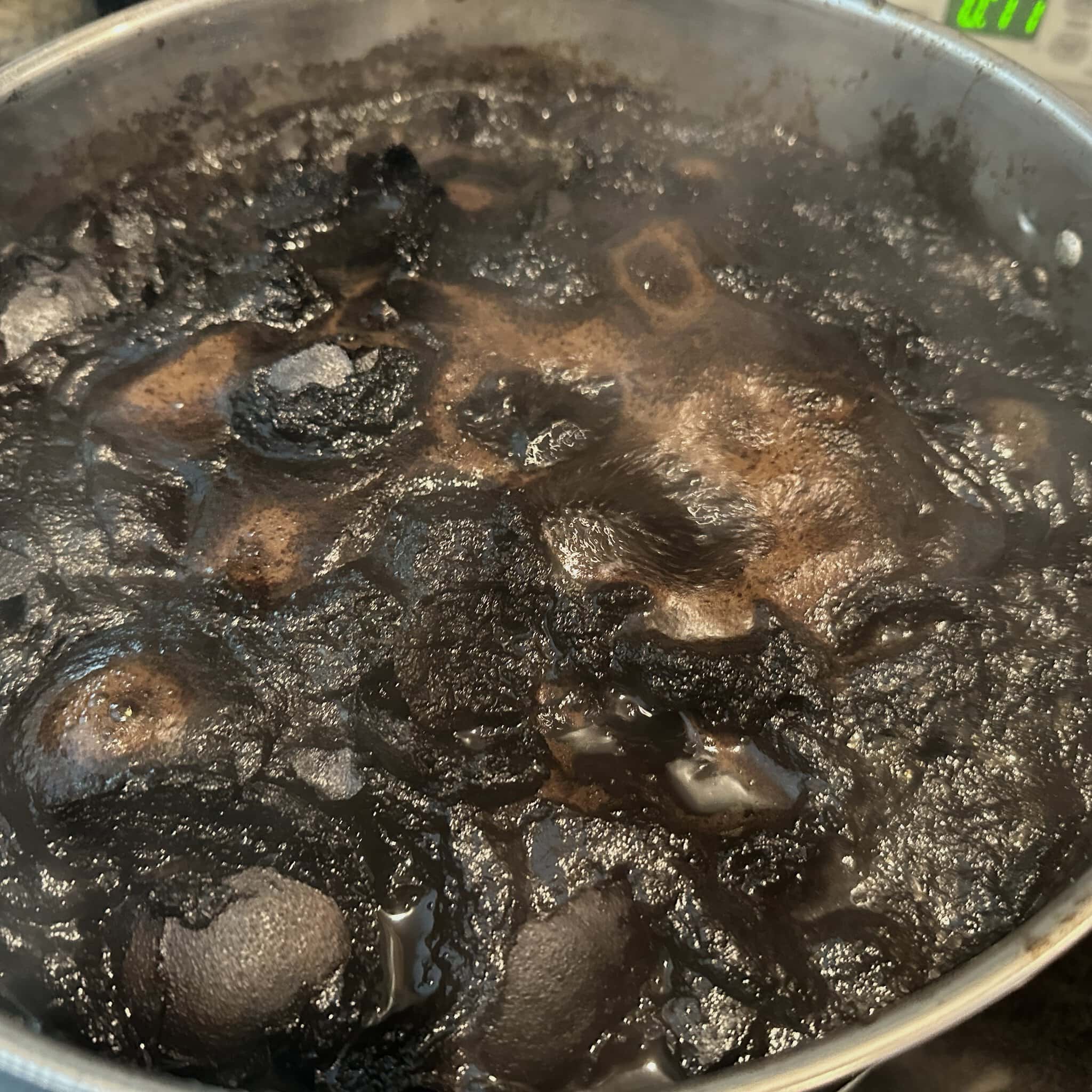
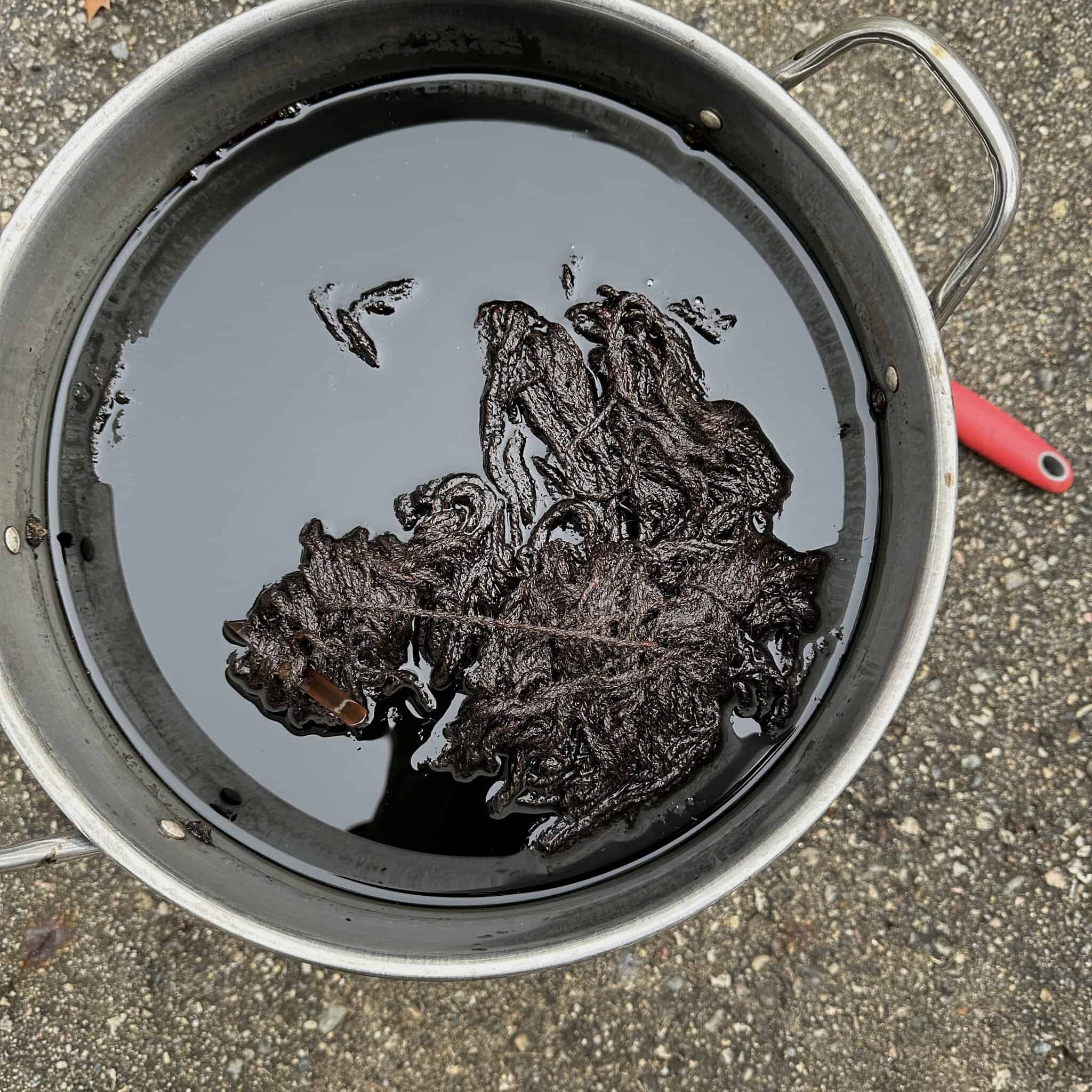

Where do natural dyes come from? Natural dye sources are all around us. But they may be invisible until they flower or set seeds. Black walnuts are an example: invisible until they drop from their trees and make a smashed mess along the roadside.
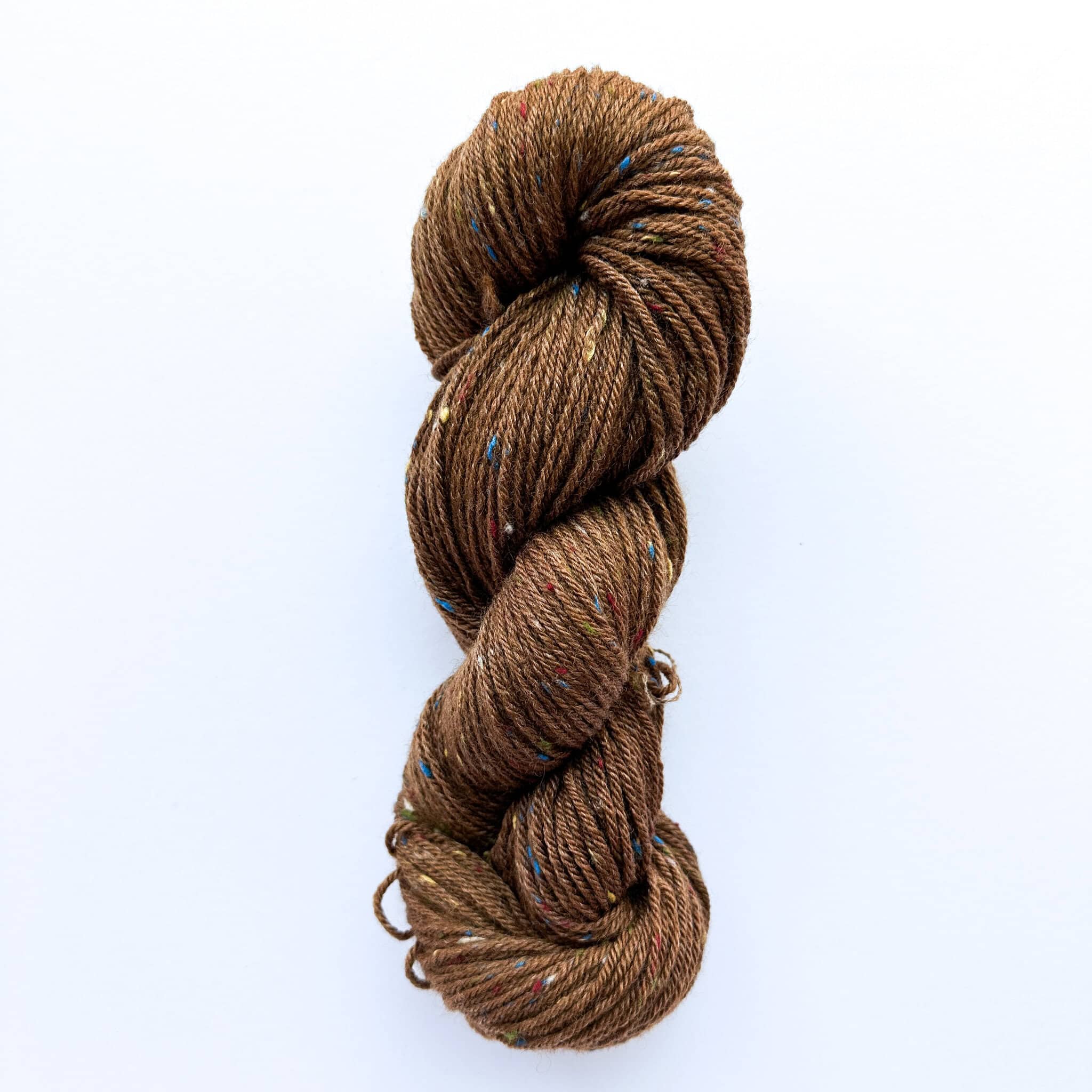
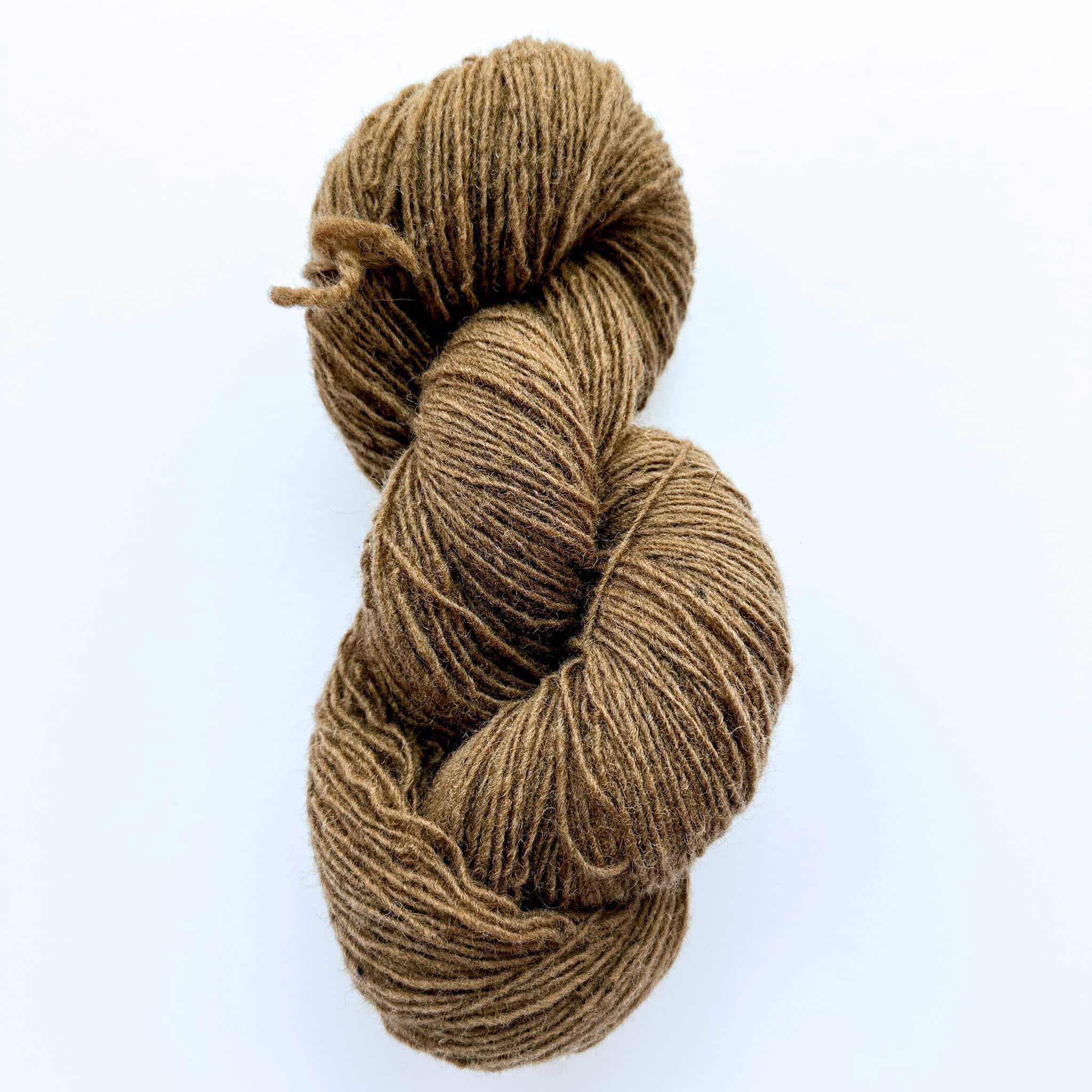
Black walnut hulls — the coverings around the actual nut (and the mess makers) — are great natural dyes, providing lovely browns. Reusing the dye bath (exhaust dyeing) provides a range of browns and tans. Here’s a sampling:
The darkest brown, Russett (on Donegal Tweed DK), comes from the first and strongest dye bath. It’s a gorgeous, slightly reddish brown. In the middle, on Meadow Rustic Tweed-Black Walnut, from the second dye bath. A nice brown brown. And finally, Latte (again on Donegal Tweed DK), from the last bath. The color strength is lessening so the yarn dyes a soft tan.
Natural dyes take a lot of time to prepare — collecting, cooking, etc. — so it only makes sense to get your money’s worth from each batch! And sometimes, exhaust dyeing is the only way to get certain colors. For example, there’s no Latte unless you dye Russett and Black Walnut first!
Hope you enjoyed learning more about where natural dyes come from. Use the link to shop yarns dyed with Black Walnut and other botanicals.