Fiber friends, how many times have you gone on Pinterest to search for patterns, knitting inspiration, or colorways for a new collection? I bet the answer is several times.
Well, let me ask you, as a fiber business owner, do you have a Pinterest page for your business? If the answer is no, then you are missing out on reaching new customers, advertising your products, and driving traffic to your website.
Since so many small business owners are discontent with the world of social media these days, I wanted to share my tips and tricks about how fiber artists could effectively use Pinterest in their business.
Also, since some of you may be new to Pinterest or have abandoned your Pinterest account altogether, I wanted to walk you through a general process of the following: setting up your account, creating strategic boards, creating pins that get clicks, and more.
What Is Pinterest
If you don’t know what Pinterest is, it’s a visual search engine that allows you to save ideas from other creators or business owners. These saves are “pinned” to a board in an individual’s account, and then that individual can go back and view those “pins” (or ideas) later.
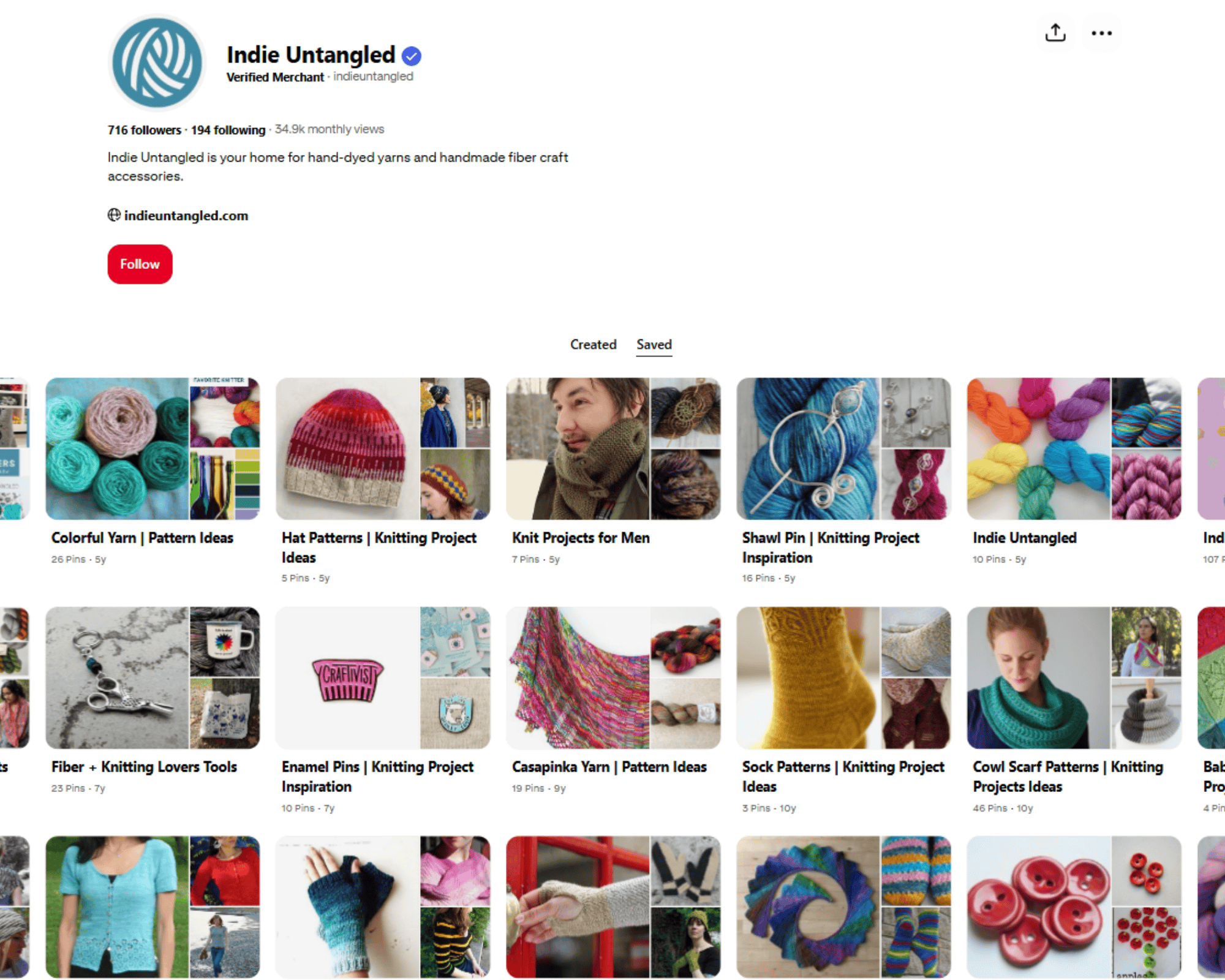
Many people tend to lump Pinterest in with other social media platforms like Facebook and Instagram. However, Pinterest is not social media.
As mentioned before, it’s a search engine, which means content can have a longer “life span” and can drive traffic to a website long after the original idea was posted.
Why Pinterest Works So Well for Fiber Artists
Now, you may be thinking that Pinterest is only good for crafts, recipes, and home décor. This could not be further from the truth because there are several reasons why Pinterest works so well for fiber artists. Below are some of the top reasons.
- People are searching for patterns and tutorials – Many Pinterest users are either crafty, looking to start a new craft hobby, or are looking for craft education. This is perfect for any fiber artists because you are most likely already creating patterns, tutorials, how-to blog posts, or process videos to promote your goods.
- Fiber art is visual and textual – Fiber content, in general, naturally stands out because of its texture, colors, and design. Due to that, patterns and skeins of yarn are more likely to be saved and clicked.
- It attracts the right audience – Instead of you posting on social media hoping that the right customers find you, with Pinterest, the right customer will naturally find you. This is because they are planning projects, looking for inspiration, and searching for what you have.
Setting Up Your Account
If you are new to Pinterest, setting up an account is super easy, and there are tons of online tutorials that can help you. With that being said, I highly recommend doing the following, regardless of whether you are new to Pinterest or have had your page for years.
- Switch to a Business Account – Doing this will allow you to have access to analytics, and you can verify your website.
- Optimize your profile – You can do this by writing a clear bio that includes keywords, professional branding, and a link to your website or Etsy shop.
Create Strategic Boards
Once you have your account set up, it is now time to focus on your boards.
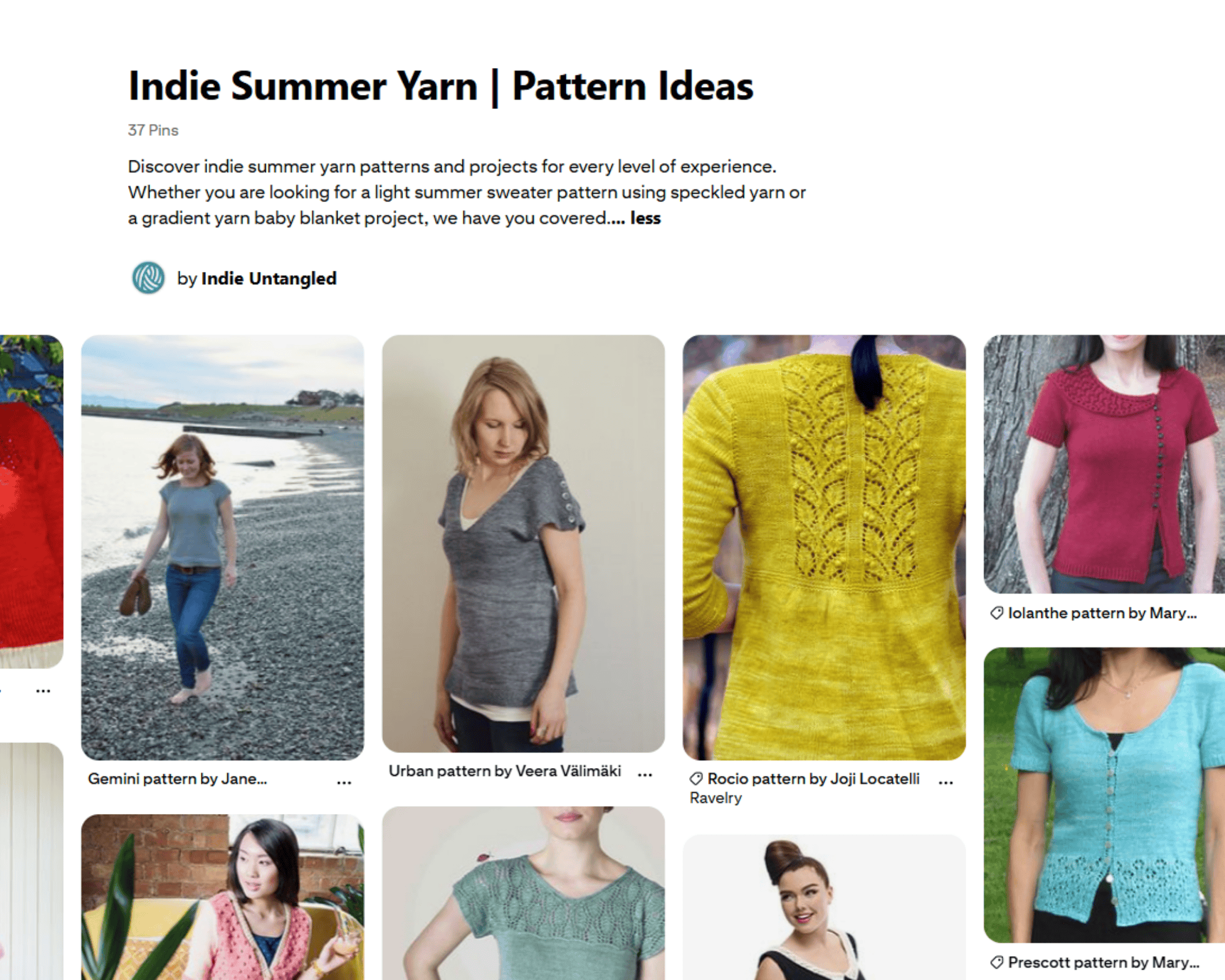
Depending on the type of fiber business you run will dictate what boards you will have. For example, since I support all types of fiber businesses, on my Pinterest page, I have boards like “Shawl Patterns,” “Project Bag,” “Scrap Yarn,” etc. Regardless of what boards you have, you will want to do the following:
- Use Keyword-Based Board Titles
- Example: Indie Summer Yarn | Pattern Ideas
- Write SEO-Friendly Board Descriptions
- Example: Discover indie summer yarn patterns and projects for every level of experience. Whether you are looking for a light summer sweater pattern using speckled yarn or a gradient yarn baby blanket project, we have you covered.
- Organize Boards by your Audience Interest
- Example: Fiber + Knitting Lovers Tools, Indie Winter Yarn | Pattern Ideas, etc.
Doing each of these three things will help to ensure that your content is not only found by the right people but also shows up in Pinterest’s search engine properly.
Create Pins That Get Clicks
The nice thing about creating pins, at least from a fiber artist’s perspective, is that your creation is the main focal point. So, you shouldn’t need to spend too much time creating pins.
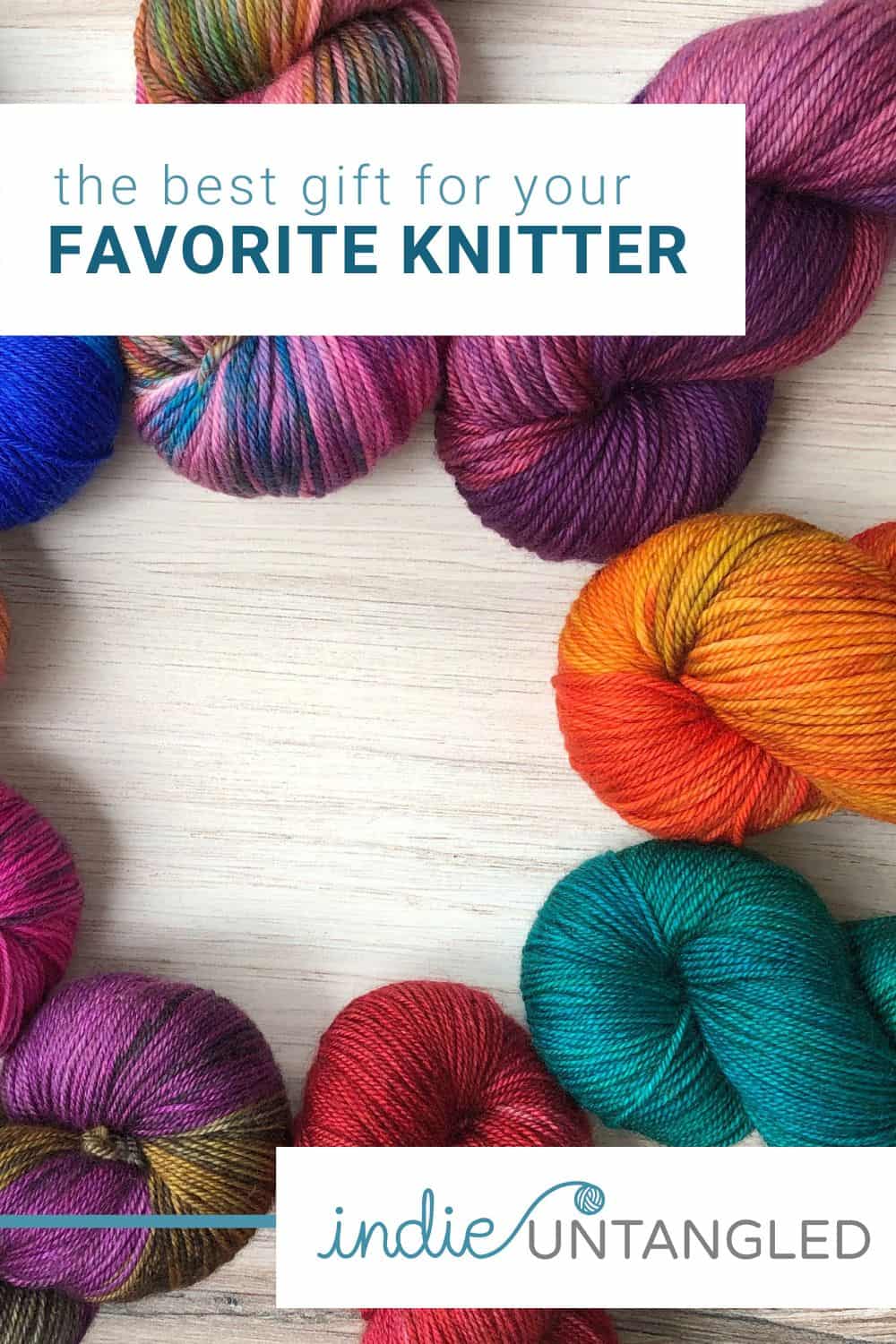
To create pins, you can use a program like Canva, which has templates that you can drop your photos into and change the text. Or, if you are using a Pinterest scheduling program like Tailwind, you can design pins in their system instead.
Either way, when designing your pin, you will want to do the following:
- Use vertical images that are clear and have good lighting
- Add simple text which highlights any benefits (like free, easy, etc.)
- Show texture or close-up details
- Make it readable for both desktop and mobile
- Watermark your photo with your business name or logo
- Use your branding colors to make the pin stand out
Once you do this, it’s highly recommended that you create multiple pins for one product or blog post. This is because you can try out different photos and texts to see what performs best.
Use Pinterest SEO Like a Pro
Once you create your pin graphic, you now have to write the pin title, description, and pin it to your chosen boards.

There are many rules of thought on how to “properly” do this; however, to keep things simple, I would recommend the following:
- Search keywords on Pinterest by using the search bar autocomplete – Doing this will allow you to see what people are actually searching for on Pinterest. – You can see this in the photo above when I search for the word knitting.
- Use keywords strategically – This means you want to include those meaningful keywords in your pin title and description, but you want to avoid keyword stuffing. Instead, you will want to write naturally in either your brand’s voice or in the voice of your ideal customer.
- Link strategically – Obviously, you want to link to the pattern, product, or topic you are promoting. However, depending on the structure of your fiber business, you may have an Etsy shop, Ravelry shop, YouTube channel, Email opt-ins, etc. Due to that, make sure you pick the link that makes the most sense and helps drive traffic to where you need it to go. Also, make sure you don’t link to general homepages or to broken links.
Develop a Sustainable Pinning Strategy
After you have pinned your content, what do you do in the long term? – Well, that will depend on you, your business goals, your time, and your budget.
With all that in mind, I would recommend the following to start developing a pinning strategy that works for you.
- Focus on consistency over volume – Pin 3-10 fresh pins per day. You can do this by batching your content.
- Use scheduling tools – You can use Pinterest Native scheduler, which is free and allows you to schedule up to 100 posts. Or you could use a paid program like Tailwind.
- Repurpose old content – Update pin graphics and repurpose old content like blog posts, YouTube videos, email opts, etc.
- Study your analytics – See what is working and what is not working, and adjust accordingly. This could mean focusing more on top-performing boards or refreshing underperforming pins.
Monetizing Pinterest as a Fiber Artist
As we all know, Pinterest is a great resource for not only driving traffic to your website but for monetizing your work as a fiber artist. This can be done in a variety of ways, so I wanted to list a few of my favorites, which are completely free (unlike paying for ads).

Link to your:
- Etsy Shop, Ravery Shop, etc.
- Sales in your shop
- Online workshops
- Membership programs/communities
- Affiliate links (your favorite tools, yarn, etc.)
Build your email list through Pinterest by linking to your:
- Free patterns
- Free downloads
- Free beginner guides
Final Thoughts & Words of Encouragement
Unlike social media, setting up and running your Pinterest page can actually be an enjoyable experience. Besides pinning your own content, you should be pinning other makers’ content, which will hopefully give you a break and help you to get inspiration for future projects.
So, start small, don’t overthink it, and have fun pinning!
To follow us on Pinterest, click here. Also, I would love to hear your thoughts on Pinterest and how you have used it in your fiber business. Let us know in the comments below!