
Free U.S. shipping on orders of $150+!

Marketplace

Artisans and designers will post here when they’re about to stock their online stores with new goodies, if they’re having a special sale, opening sign-ups for yarn clubs or releasing a pattern.

Visit the Indie Untangled blog every Friday, where we’ll list the shop updates, sales and events coming up that week. Sign up for the newsletter to have that list sent straight to your inbox.

Are you a dyer, designer or maker? Learn more about advertising on Indie Untangled.

View Posts By Tag

View Posts By Shop

Showing Fiber Dreams

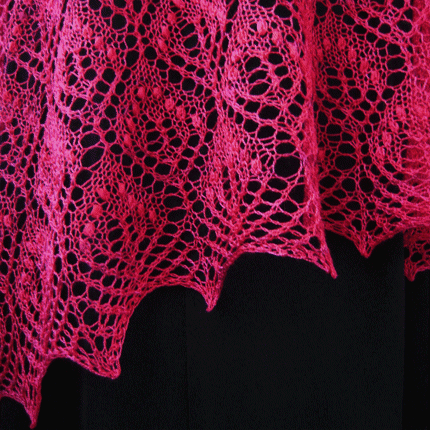
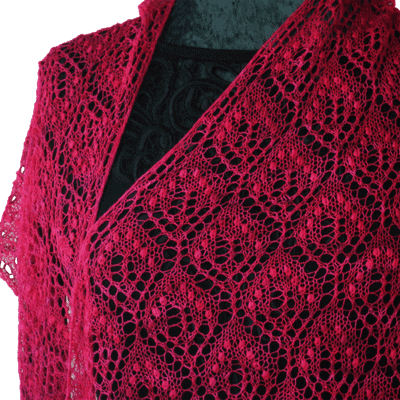
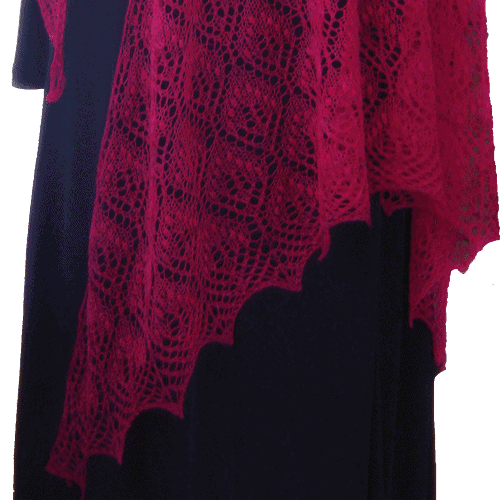
I started looking for a good name for this design practically the moment I cast on for it. I searched high and low, and nothing quite worked. Nothing reached out to me, and said This is it! Then one day a friend said that the stitch looks like drops of dew, which I totally love. Do you have any idea how many designs are named Dew Drops, or Dewdrop, or simply Dew? Neither do I. I stopped counting before I reached the end. I was smitten with the idea, though, and am utterly embarrassed that it took me ages to think of Dewpoint. Yes, I know it’s supposed to be two words, but this is a pattern name, so I can ignore the rules, if I want to. I had an additional reason for wanting “dew” in the name. I had to share this little quote with you that another friend found. It’s from Philip James Bailey:

“The dew, ‘Tis of the tears which stars weep, sweet with joy.”

This triangular shawl starts with a cast on of only six stitches, and increases only along one side until it’s full width. The shawl can be made in any one of the five sizes provided, or simply knit until you’re close to running out of yarn, or get bored. Then work the border until you get bored, or run out of yarn.

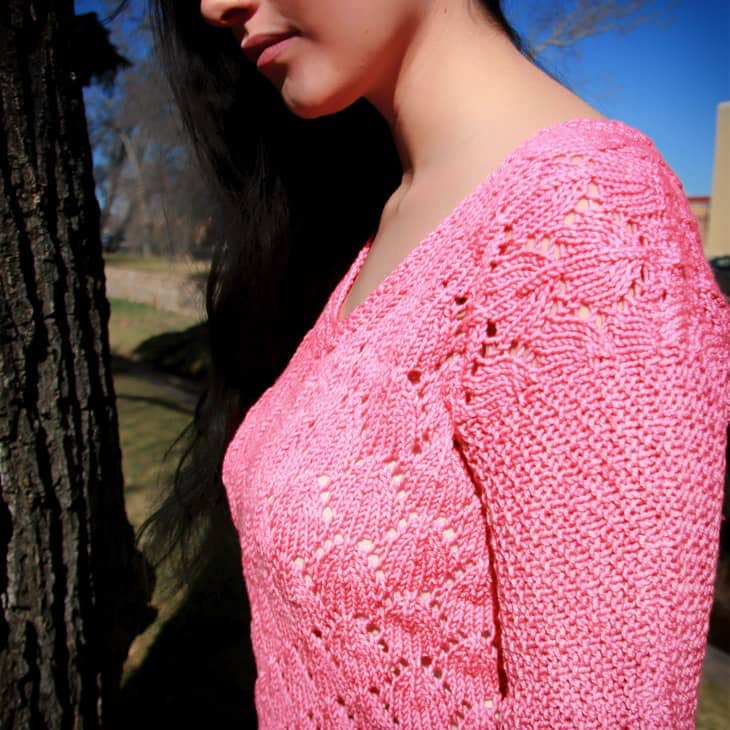
When I was a kid, back in the dark ages, I was actively enouraged to go play outside as much as possible. When it rained, though, I got to stay inside and watch movies on TV. Sometimes, I even lucked out and something really good was on, like Frank Capra’s “It’s a Wonderful Life.” The thing I thought was wonderful about this movie was that the people were so very real. Down to the smallest detail—which having seen the movie so many times I really noticed. Like Violet. She was always a little bit of a flirt, in a fun sort of way, tossing her hair, swinging her hips, that kind of thing. In the end, it wasn’t just George Bailey’s life that was improved, but all those people he touched, including Violet. This lacy tee is just the sort of thing I envision Violet choosing to throw on when she wanted to look extra special without a lot of extra effort.

Violet’s Wonderful Life is an all-over lace tee that is knit in the round from hem to armholes. Stitches are added for the sleeves, and front and back are worked flat to the shoulders.

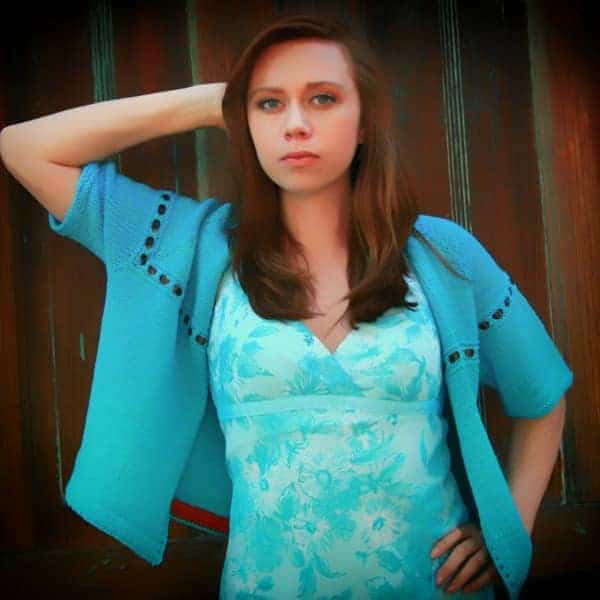
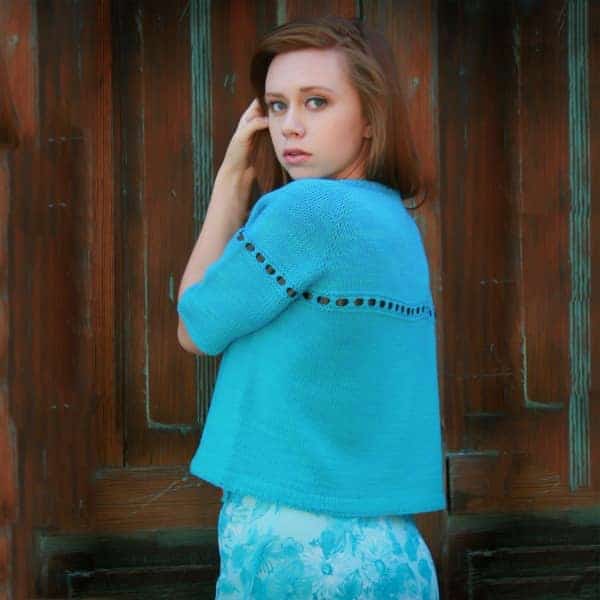
When I was young, I lived where the summer temps would soar. I’ve always hated hot weather — there are only so many layers of clothing you can remove before it gets downright embarrassing! The cool nights that follow the hot days almost make the heat worthwhile, though. Almost. For years I wanted the perfect little summer sweater for those cool nights—you know the one: the sweater you can throw on over a skimpy little dress after sunset, or wear with jeans and a white top for those casual evening strolls along the shore. With Summer Blues I think I’ve finally found it. This is the sweater I wish I’d had when sitting outside in a friend’s gazebo long past midnight, having that last glass of wine before heading home.

Summer Blues is a raglan cardigan that is knit in one piece from the top down. The folded hem can be knit in a contrasting color for a little extra sizzle, and ribbon that matches the hem color, or coordinates with your dress, can be threaded through the eyelets for additional fun.

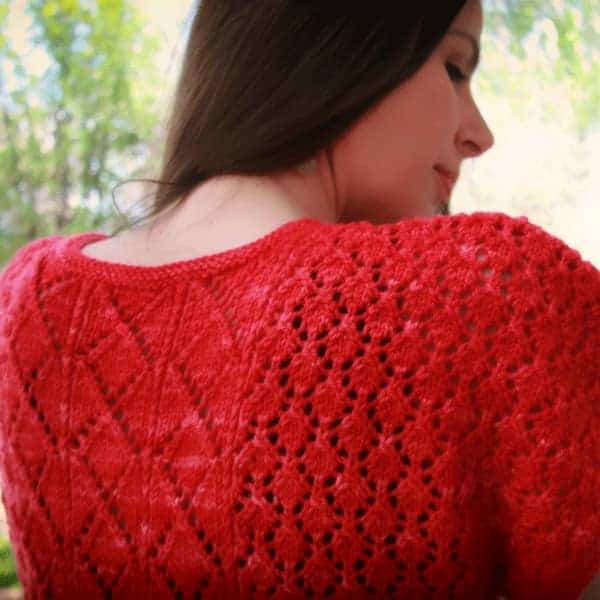
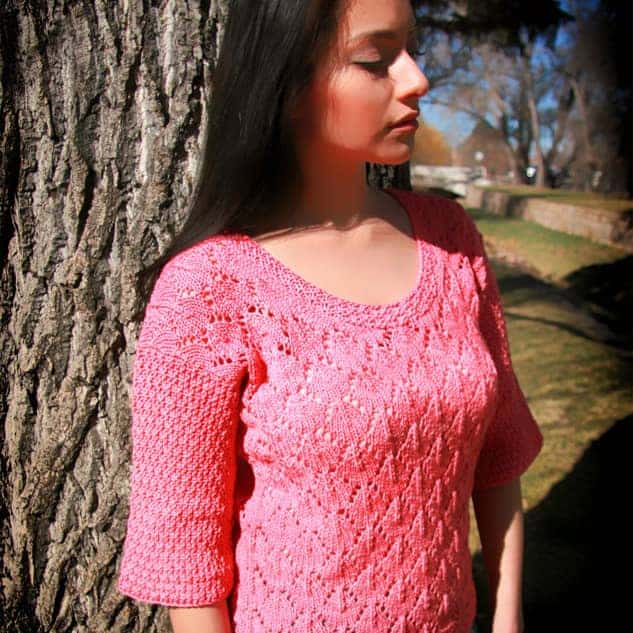
I am a tea drinker. I don’t have anything against coffee—except the taste. It’s awful stuff. Yuck. Anyway, I’d been wondering what to call this design while finishing up my morning tea, and looked at the sweater again. It’s a t-shirt that’s covered with leaves. Hm. A tee shirt or a tea shirt? Covered with tea leaves? We have a winner.

Tee is boxy, and designed to be quite loose, or not. The tee on this lovely model is the second smallest size, and though it was designed to fit a 33-inch model, it looks lovely on her 36-inch frame. Because of the stretchy nature of knitting, this same sweater also fits my 40-inch (ish) chest nicely giving a more fitted look, because of the negative ease.

Tee is knit in the round from the hem straight up to the armholes, then stitches are added for the sleeves with a provisional cast on, and worked straight up to the shoulders, pausing only to shape the neckline. The provisional stitches are picked up for the flip side’s sleeves, and knitting continues. The only seaming on the entire sweater joins the top edges of the shoulders and sleeves.

Throughout the month of April, 2016 there’s a KAL for this and all of my other designs in the knitCompanion group. Join! There are prizes. 🙂 Linky: http://www.ravelry.com/discuss/knitcompanion/3408728/1-25

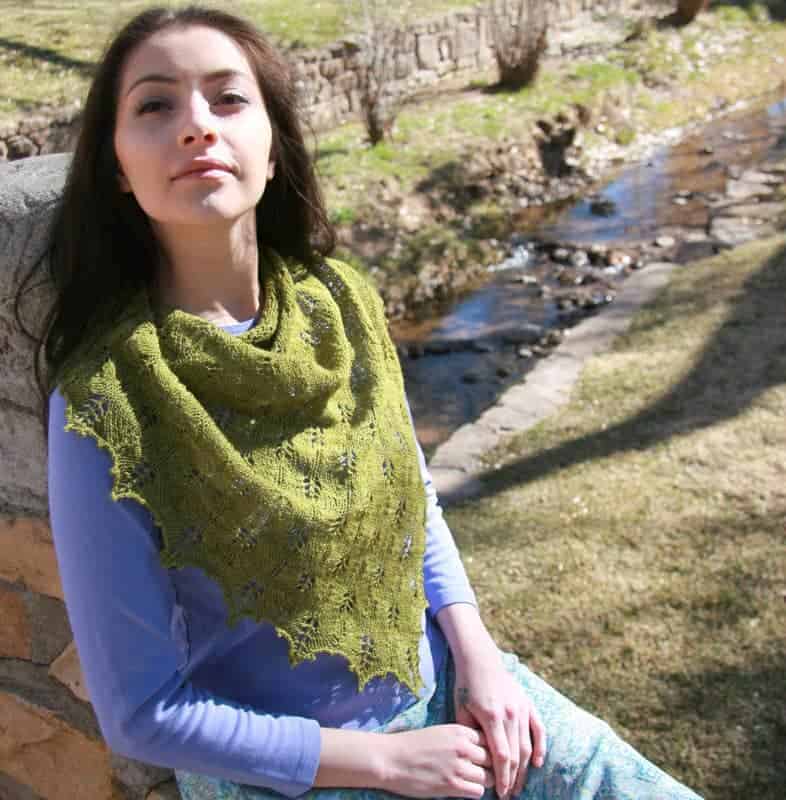
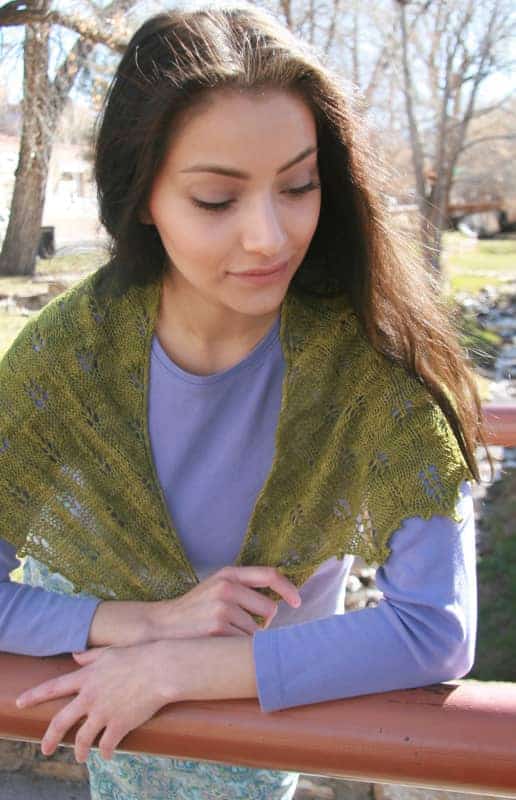
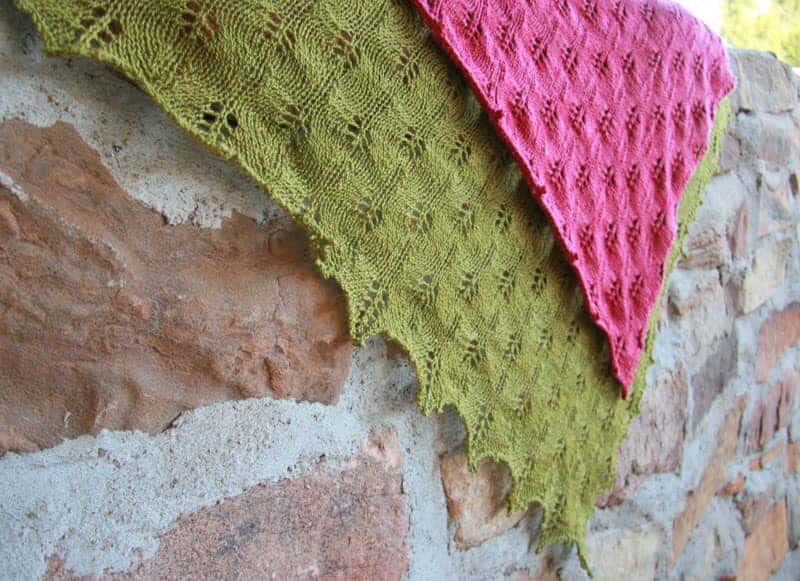
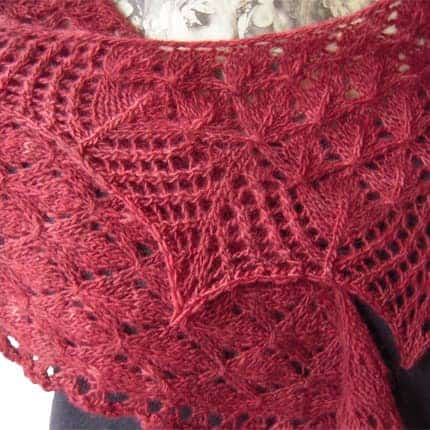
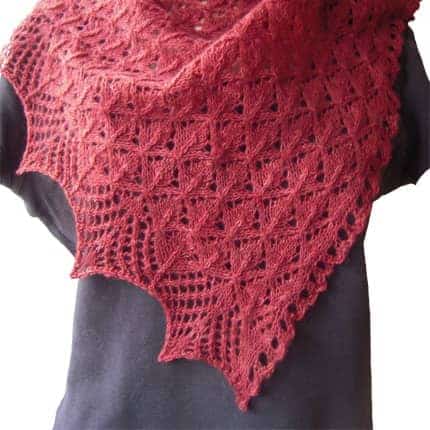
I fell in love with the fir cone stitch that is the basis for this design years ago. I even used it once before, as part of a much more complicated shawl design (In the Woods). It’s simple beauty has been calling to me again, and so I thought I’d use it in something where it could stand out, where its own beauty, its simple elegance could really shine.

This simple little triangle starts with a cast on of only four stitches. It can be knit in different weights of yarn, to a given size, or until the yarn runs out. I’ve done the calculations for five sizes in two different weights of yarn for you, so you know from the outset if you’re going to make a little shoulder shawl, as shown, or a wonderful thing to really wrap yourself up in. You also have the option of two different bind offs — use whichever one you want, depending on how much yarn is left when you reach your desired length, and what kind of edge you prefer: plain or fancy.

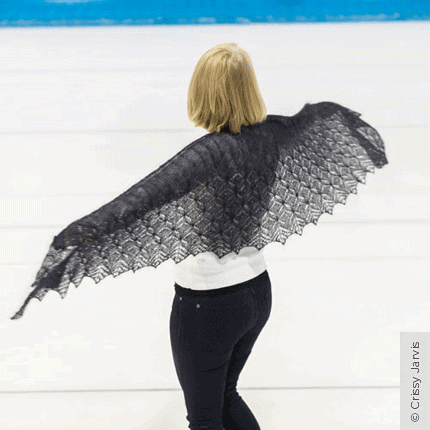
Geometry, tall buildings, ice crystals, sharp edges, crisp lines; in cold country these are rounded, softened by the drifting snows that winter brings. The crisp lines and geometric forms made with yarn overs, decreases, and cables are softened by the fuzziness of the mohair in the yarn. Beads add the sparkle of snow flakes illuminated against a night sky. This shawl is worked from the top down, using short rows to create the crescent shape. A firm cast-on and loose bind-off help make blocking easier. Photos by Crissy Jarvis.

From London’s Buckingham Palace to the Palace of Versailles, from Esterházy Palace in Hungary to Catherine Palace in St. Petersburg, the main gates that provide the first line of security to so many castles are stunning lace motifs wrought of iron, and gilded with gold, instead of knit with two sticks and some string. At least, that’s what a kind knitter thought of when she suggested Palace Gates might be the perfect name for my latest design.

There’s been a new twist to triangular shawls lately, a new canvas, as it were, for lace and color, one that other designers have been playing with, and I haven’t. Until now. Palace Gates is my first go with this new triangle. I think I’m hooked.

Knit in one piece from a four-stitch cast on, this shawl will grow and grow, until you reach the size you want, run short of yarn, or just get bored. So long as you work an odd number of main repeats, you can stop anywhere, work the border rows, then bind off. I’ve already done the math for you for four sizes. Tips are included for making the border bigger, if you want to use up the last bits of your yarn.

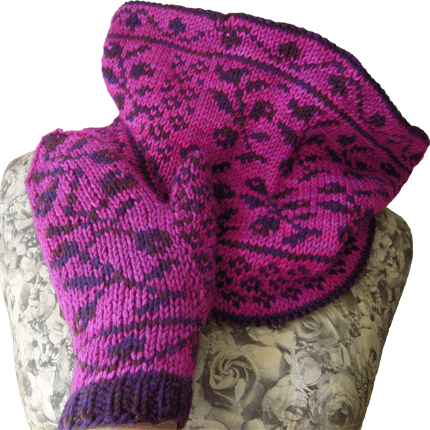
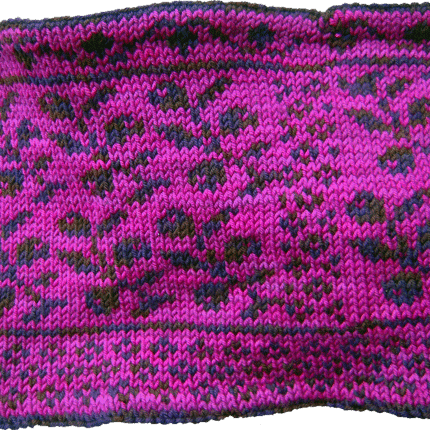
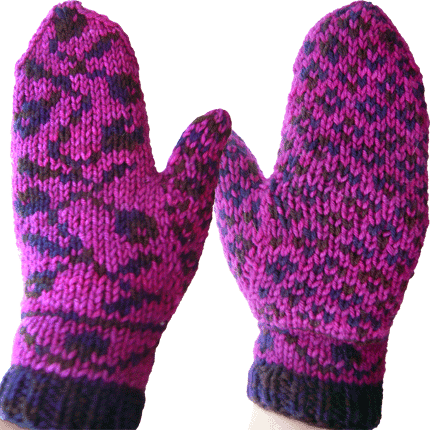
I’m a life-long book collector. In addition to piles of books of knitting, fiction, art, counted cross-stitch, needlepoint, gardening, as well as a fair number of other things, I have always been attracted to stitch dictionaries, and little books of patterns on a given theme. All three motifs in these designs came from a slim volume of Swedish stranded colorwork designs that I’ve had so long that I no longer know where or when I acquired it. Once I had these lovely motifs working together, I needed a name for the cowl design. I thought that something Swedish would be appropriate. A dear friend of mine is actually from Sweden, so I went to her for inspiration. Without my telling her, she thought the main motif looked like berries, and so suggested Vinterbär for the cowl, which is Swedish for “winter berries.” When going for a name for the coordinating mitten pattern, Björnbär, I named it after the blackberries that grow wild around my house. I named this small leaflet after the main berry motif used in both designs, with a twist. It’s also in Swedish.

Both designs are knit in the round, and feature the same three stranded colorwork motifs, though the main motif on the back of the mittens has been slightly modified to work on a hand. The mittens can be worked whatever method best suits the knitter: DPNs, two circulars, magic loop, or anything else that gets the job done.

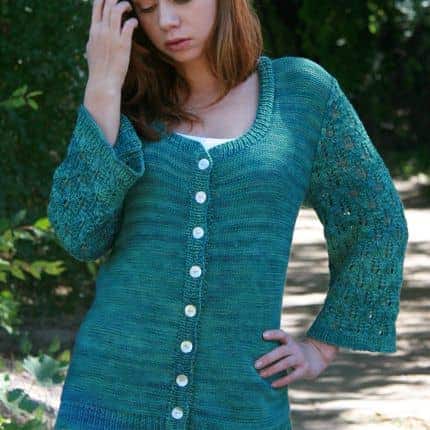
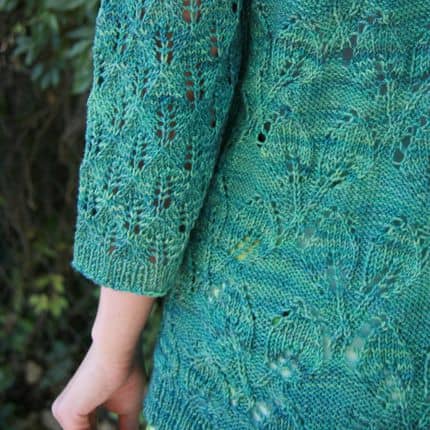
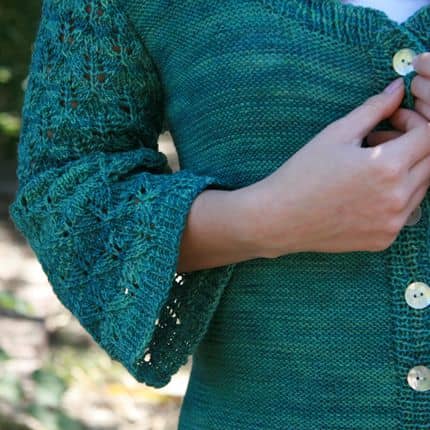
Green. I’ve had a lifelong love affair with plants, and all the shades of green they come in. Plants became especially dear to me when I lived in southern California, and had such a hard time getting them to grow. I wasn’t the only one who wilted down there. Many plants I’d had for decades withered and died. Here in the Pacific Northwest, however, plants of all kinds practically leap out of the ground. In spring and summer, there are so many leaves on the trees by our house that it sounds like it’s raining — even when it isn’t — because the wind makes the millions of leaves rustle together. This sweater started with the back, with a delightful leaf stitch I found that reminds me of my new home. A dear friend suggested that I make the sleeves lace, too, but that I use a different, coordinating, stitch. I knew the perfect one.

Knit in one piece to the armholes. Simple reverse stockinette stitch in front, party in the back. The boxy, loose ¾-length sleeves, also knit from hem up, have their own party happening.

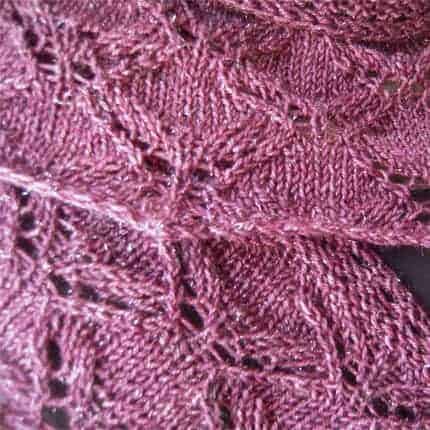
This gorgeous yarn (Nebula from Anzula) sparkles like the night skies, so when looking for a name for the pattern, I originally looked toward the skies, at the innumerable things in our solar system and the distant reaches of space. It occurred to me suddenly that the sky isn’t the only thing that sparkles at night. Millions of tiny little lights glimmer in our seas, too. One of my favorite things to do when SCUBA diving at night is to turn out my light, and in the total darkness wave my arm through the water. The thousands tiny creatures living there, normally invisible to the naked eye, sparkle in return. It’s breathtakingly beautiful.

The construction of this shawl is simple: it’s knit from the lace edge up, then shaped into a crescent with garter stitch short rows. However, eight of the wrong-side rows include lace manipulations. These wrong-side lace rows aren’t too bad to do, but make sure you count right!

For sale now on Ravelry. Pattern also open to shops who participate in the in-store program!